Jean Lurçat: the renovator of modern tapestry and a total creator.
Born in Bruyères in 1892, Jean Lurçat first studied painting before devoting himself to tapestry, a discipline in which he became one of the great masters of the 20th century. From the outset, he distinguished himself with a vision that combined symbolism, modernity and monumentality. Early on, he questioned the role of tapestry in the history of art, and set out to take it out of the realm of ornament and place it at the heart of visual creation.
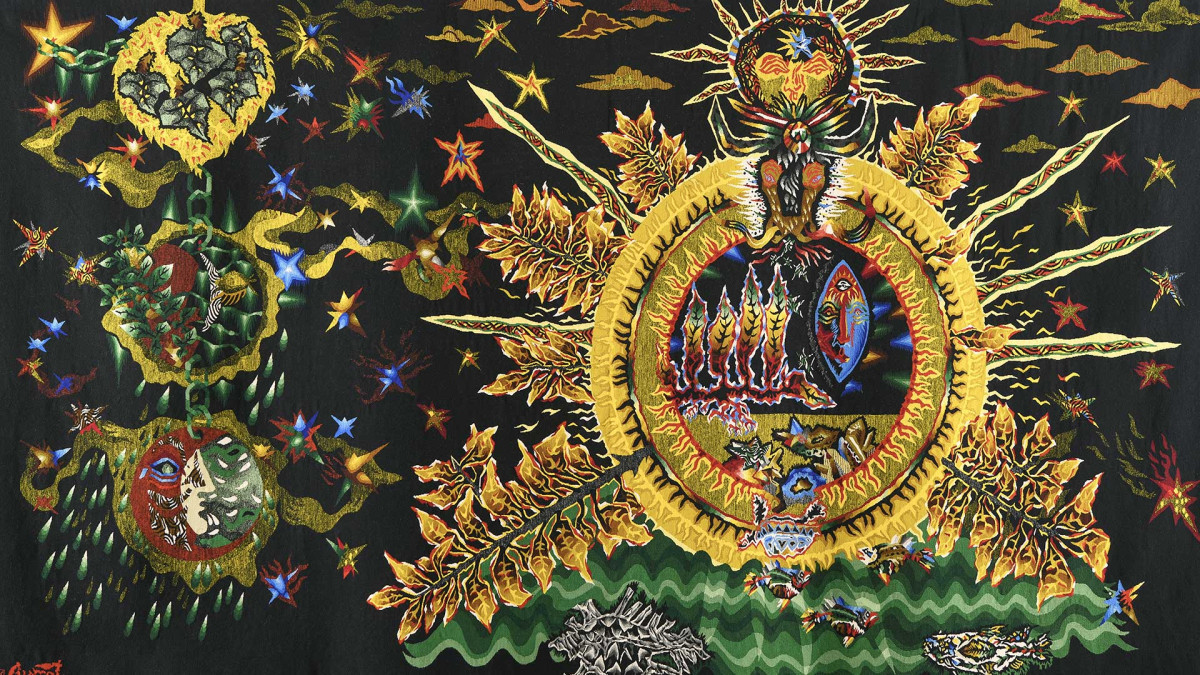
Lurçat saw tapestry as an autonomous art form, with its own language: pure colors, clean flat tints, powerful rhythms, stylized lines, absence of gradations, direct relationship to universal themes. He simplified palettes, imposed a clear, strong reading of his motifs, and created compositions sometimes reminiscent of medieval manuscripts, ancient frescoes or certain primitive arts, yet resolutely modern.
His imagination is nourished by symbols: stars, suns, moons, firebirds, trees, plants, constellations, fantastical animals. These motifs become emblems that structure his work. Nature, night, the cosmos, humanity, war and peace are recurring themes, treated with incomparable poetic force.
The Second World War played an essential role in his creative evolution. Lurçat, deeply affected by the conflict and destruction, undertook a monumental series in which tapestry became an art of resistance, reconstruction and spirituality. This led to his most famous cycle: Le Chant du Monde, a vast collection of tapestries symbolizing the fragility, rebirth and vital power of nature and man.
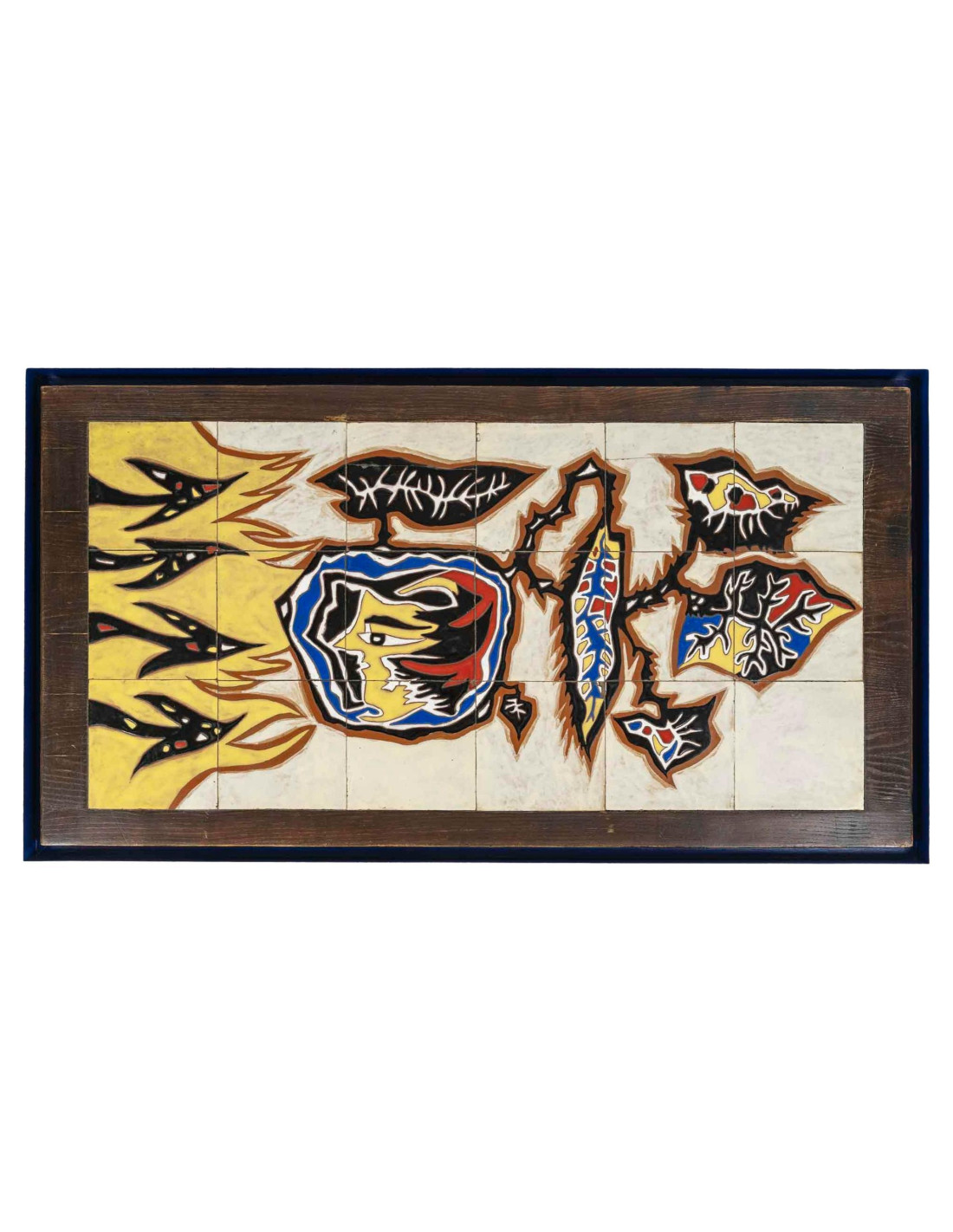
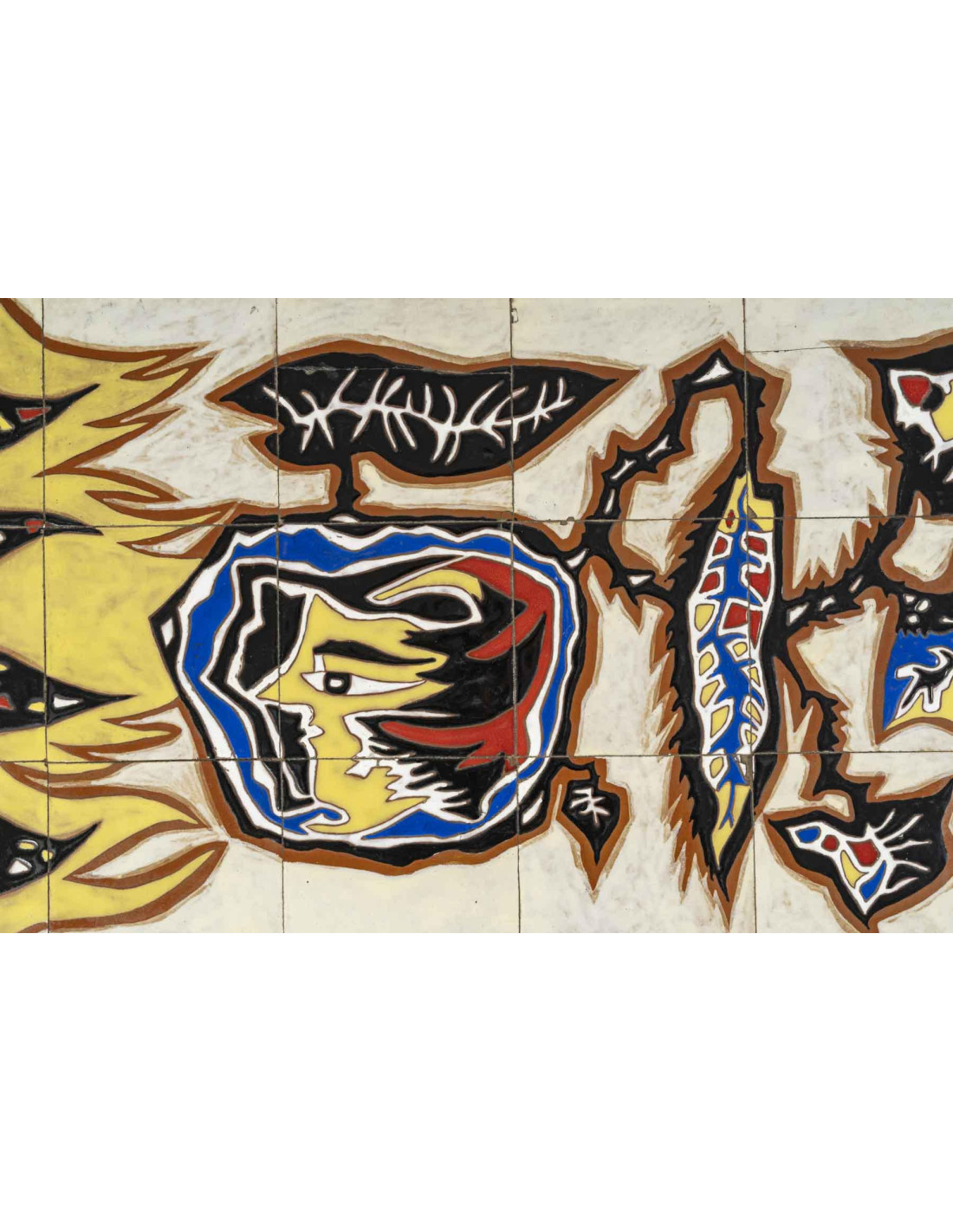
Lurçat didn't limit himself to tapestry. He created ceramics, and paintings, and decorative cartons, and architectural decors, he has developed a complete universe where art and life intermingle. His clean, expressive lines make their mark in all the fields in which he works. He also works with prestigious manufacturers, passing on his knowledge and reinventing the relationship between craftsmen and artists, between tradition and modernity.
Thanks to him, French tapestry underwent a spectacular revival. Lurçat revitalized ancient methods, ensured the quality of wools, dyes and looms, and worked closely with the Aubusson workshops. He contributed to restoring the historic and international status of these factories.
His influence remains immense: artists, decorators, textile designers, students and continuators perpetuate his vision of a monumental, strong, decorative art deeply rooted in humanity.
Today, the works of Jean Lurçat occupy an essential place in public and private collections. His powerful, luminous tapestries are sought after for their artistic dimension, but also for their importance in the history of 20th-century design and decoration. To own a work by Jean Lurçat is to welcome a creation where poetry, strength, color and symbolic thought come together.