- News
- 3 likes
- 46422 views
- 0 comments
Alvar Aalto (1898-1976) is one of the most important architects of the 20th century. In fact, Aalto was not only an architect, but also a designer, urban planner and furniture maker. His work is characterized by a deep understanding of the relationship between architecture and nature, and a commitment to creating buildings and spaces that are functional, humanistic and visually arresting.
Aalto's early work was strongly influenced by the Nordic Classicism movement that dominated Scandinavian architecture in the 1920s. This style was distinguished by the use of traditional materials such as wood and stone, and by a simple, thoughtful aesthetic that emphasized the essential qualities of the materials themselves. One of Aalto's most famous early works is the Turun Sanomat building (1929-30), located in Turku, Finland. This building is a classic example of the early end of Nordic classicism and a harbinger of modernism, with its simple massing, use of natural materials and emphasis on functionalism.
Aalto's style began to evolve in the 1930s, as he became increasingly interested in the relationship between architecture and nature. This interest is reflected in his designs for the Paimio sanatorium (1929-1933) and the Villa Mairea (1938-1939). The Paimio sanatorium, designed to treat tuberculosis patients, is distinguished by its innovative use of light, color and materials. The building's interiors are designed to maximize exposure to natural light, and the use of colored glass in the windows creates a warm, soothing atmosphere. Villa Mairea, designed for a wealthy Finnish industrialist, also stands out for its integration with nature. The building is surrounded by a dense forest, and Aalto's design includes many large windows that allow occupants to feel part of the natural environment.

Paimio chair (1931-32)

Säynätsalo Town Hall
In the 1940s and 1950s, Aalto's work increasingly focused on urban planning and civic architecture. During this period, he designed a number of important public buildings, including Finlandia Hall (1962-71). Finlandia Hall, located in Helsinki's Töölö district, is one of Aalto's most important works. The building is a multifunctional cultural center featuring a concert hall, conference rooms and exhibition spaces. The building's design is characterized by a fluid, organic form reminiscent of Finland's natural landscape. The Finlandia Hall is a magnificent demonstration of Gesamtkunstwerk, showcasing the concept in all its glory. Gesamtkunstwerk refers to the idea of combining different art forms to create a complete work of art. The building is both a grand and comfortable venue, perfect for hosting formal and informal events.
Aalto's furniture designs are also an important part of his legacy. He began designing furniture in the 1930s, and his pieces are known for their simplicity, functionality and elegant use of natural materials. Aalto's most famous piece of furniture is the Paimio chair (1931-32), designed for the Paimio sanatorium. Made from folded plywood, its ergonomic design was intended to make it easier for tuberculosis patients to breathe. Today, the Paimio chair is considered one of the most important pieces of furniture of the 20th century, and is still in production today.
In addition to his architectural and design work, Aalto was also a prolific writer and lecturer. He wrote numerous articles and books on architecture, urbanism and design, and was a sought-after speaker on these subjects. Aalto was also committed to the idea that architecture could be a tool for social change. He believed that good design could improve people's lives, and worked tirelessly to promote the idea that architecture and design should be accessible to all, not just the wealthy.
One of Aalto's most important contributions to the field of architecture was the development of a new type of building technology. In the 1950s, Aalto began experimenting with a new material, laminated wood, which he believed had enormous potential as a building material. Laminated wood is made by gluing thin layers of wood together to create a strong, flexible material that can be used to create unusual, curved shapes. Aalto used laminated wood in a number of his projects, including the Finnish Pavilion at the 1939 World's Fair in New York and Säynätsalo Town Hall (1949-52).

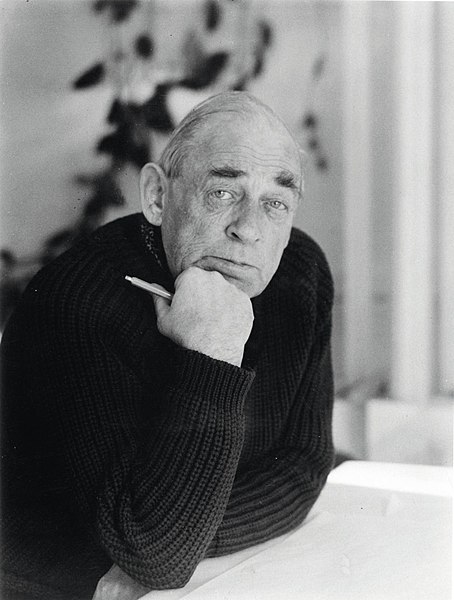
Alvar Aalto (1960)
Aalto's work has had a lasting impact on the field of architecture, and his influence can be seen in the work of many contemporary architects. His commitment to functionalism and modernism, his deep understanding of the relationship between architecture and nature, and his belief in the power of good design to improve people's lives remain important values in architecture today. In recognition of his contribution to architecture, Alvar Aalto received many prestigious awards throughout his life, including the Royal Gold Medal of the Royal Institute of British Architects and the Gold Medal of the American Institute of Architects.
Alvar Aalto's personal life was closely linked to his professional career, as his wife Aino Aalto was also an architect and designer, working alongside him. The couple met while studying architecture at Helsinki University of Technology, and formed a lifelong partnership. Aino was an important collaborator in many of Aalto's projects. She played an important role in the design of many of his most famous buildings and furniture. The couple had two children and worked together to create a home that was both functional and beautiful.
Despite his professional success, Aalto faced personal difficulties throughout his life. He is thought to have suffered from depression and anxiety, and struggled with alcoholism. He continued to work until his death in 1976, but his last years were marked by declining health. Despite these difficulties, Aalto remained committed to his work and continued to be a prolific designer and writer throughout his life.
His deep understanding of the relationship between architecture and nature, his commitment to functionalism and good design, and his use of innovative building materials made him a pioneer in the field of architecture. Aalto's legacy can be seen not only in his buildings and furniture, but also in the countless architects who continue to draw inspiration from his work.
Comments (0)