The French art of living applies in particular to the table. The art of welcoming prestigious guests for dinner is still an important tradition today. The moment of the meal is of prime importance, as it provides an opportunity for convivial discussion in a setting that should be rich and pleasant. That's why in France, table setting is an art that has no equal anywhere in the world.

A table needs to be organized!

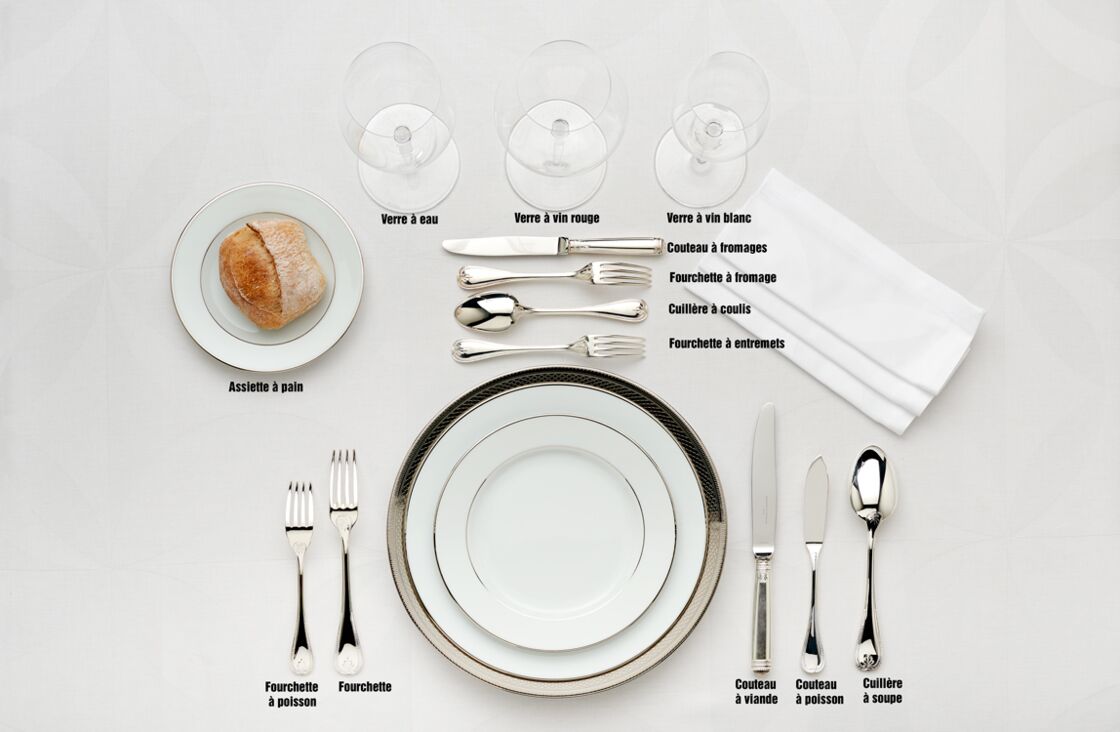
The table is set on a fine tablecloth and placemats. The various elements - cutlery, plates and glasses - are arranged in a precise order according to the plan illustrated opposite.

The plate is placed 3 cm from the edge of the table. The bread plate is at the top left. The placement of cutlery follows a simple logic: its use. The fork, which is handled with the left hand, is placed to the left of the plate. The cutlery is then arranged in the order of the menu: starter cutlery furthest from the plate, main course cutlery closest to it. Dessert cutlery is placed between the plate and glasses, with the handles facing the hand that will pick it up. The spoon is held with the right hand, so its handle is turned to the right. In France, forks are placed with their tines on the tablecloth, and the backs of spoons face the ceiling. Knives face the plate. Glasses are placed in descending order of size: water glasses on the left, followed by red and white wine glasses. The champagne flute, if any, is set back to the right.

butter knife

The butter knife is a kitchen essential, especially in France! As the French are great bread lovers, they are a regular feature on dining tables.

cheese knife

Another must-have of French gastronomy: cheese! A cheese board is always accompanied by a knife, so that guests can help themselves with ease.

fish knife

Fish needs to be cut finely and gently so that it can be enjoyed without being mushy. That's why you'll need a fish knife with a smooth blade to savor those iodized flavors!

meat knife

The essential meat knife! To carve a generous piece of meat, nothing beats a special knife. Equipped with small teeth, the meat knife helps you cut your piece like butter.

the classic fork

Of course, you're familiar with the classic fork found on every table. With its 4 prongs, it can be used for all types of classic meals.

the oyster fork

Seafood lovers, this fork is for you! Oysters aren't easy to eat, even though they're delicious. To avoid getting dirty, choose the dedicated oyster fork.

fish fork

As with the knife, fish is eaten with a fork that is rounder than a conventional fork.

dessert fork

For dessert, a 3-pronged fork is placed at the top of the plate. This way, diners know that the fork is not to be used until the sweet end of the meal.

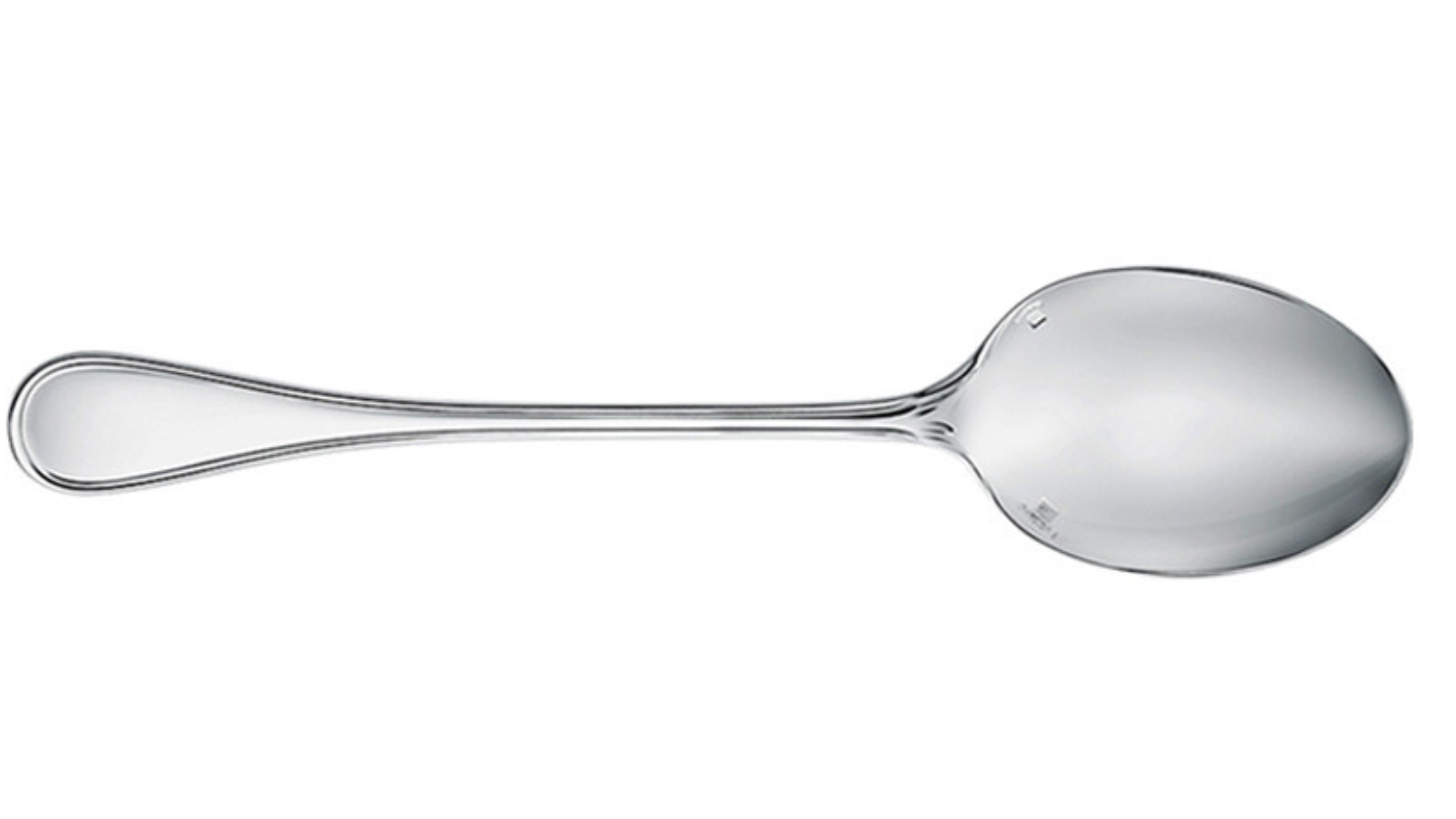
Soup spoon

Inevitable when drinking soup: the soup spoon! Wider and longer than other spoons.

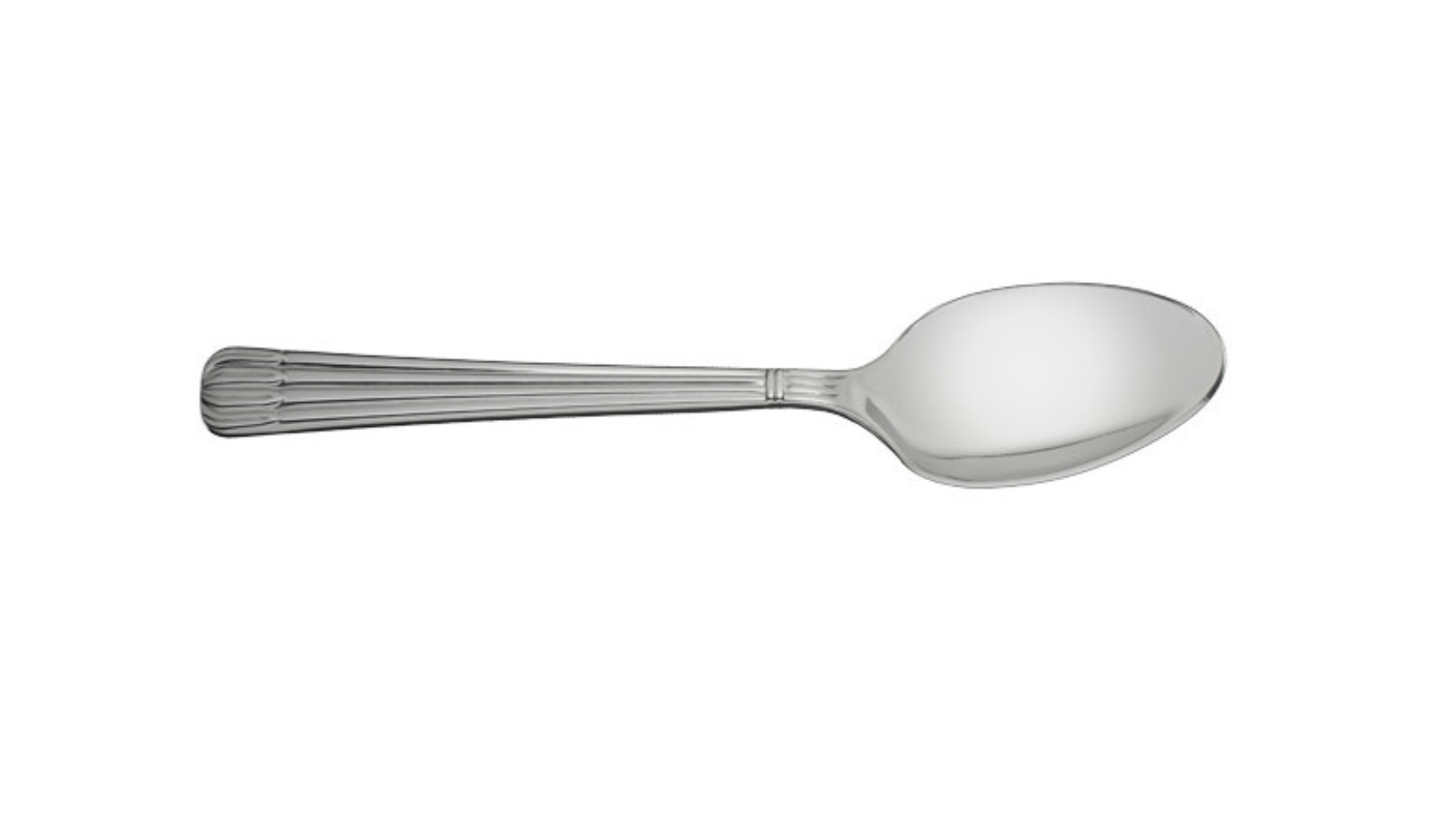
Dessert spoon

Like the dessert fork, the dessert spoon is placed at the top of the plate.

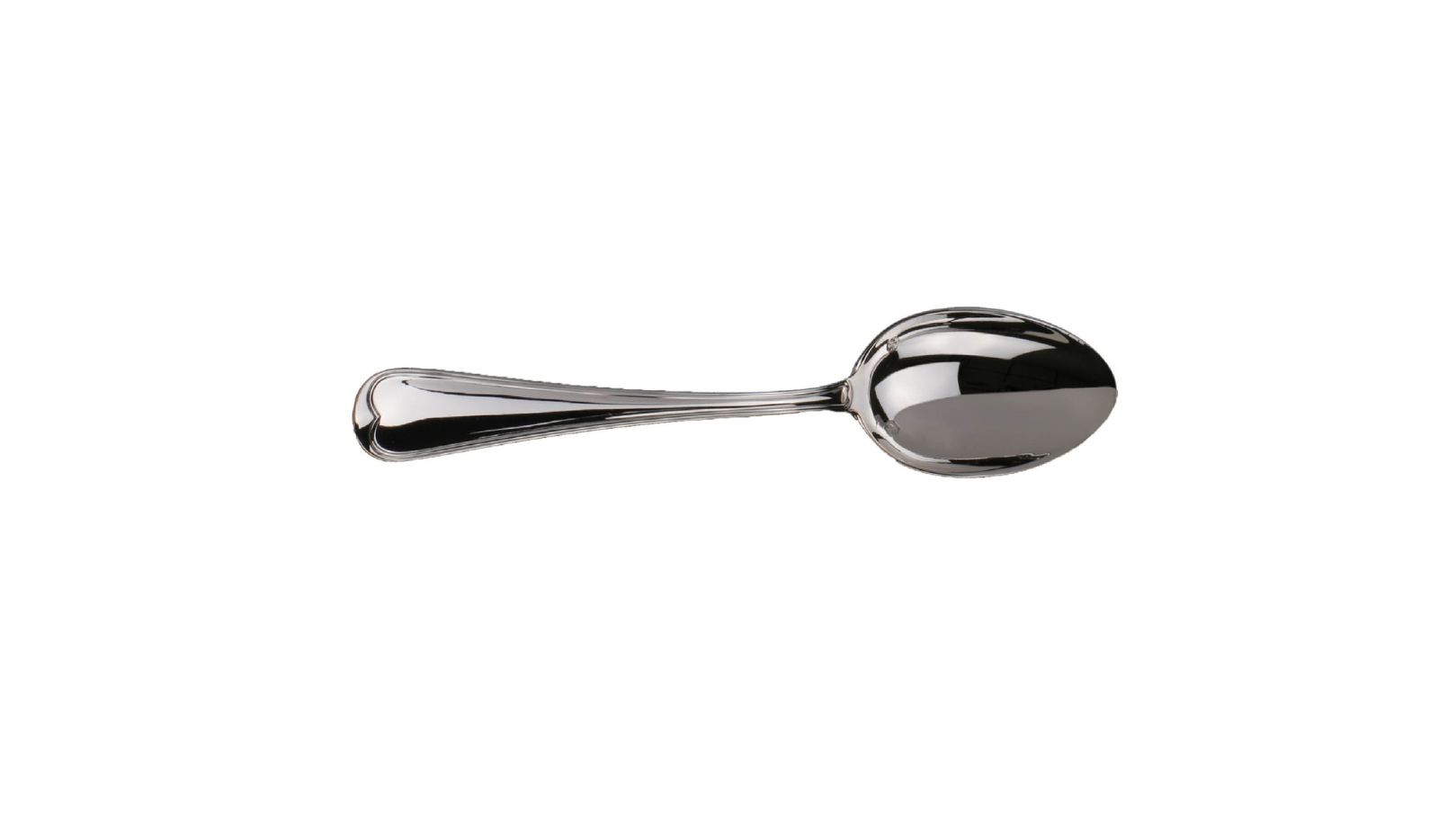
Coffee spoon

There's a spoon specially designed for coffee. Smaller than the dessert spoon, it sits on the edge of the saucer.

Christofle, master of silverware

Founded in 1830 by Charles Christofle, Christofle is one of the great houses that have contributed to the development of French tableware. The company became particularly famous for gilding on an industrial scale, thanks to electroplating. This meant that middle-class people who couldn't afford solid silver flatware were delighted to be able to buy something as beautiful for less.

Product added to wishlist