Salvador Dalí was born in 1904 in Figueres, Catalonia. From an early age, he showed an interest in drawing and painting, encouraged by an academic training that enabled him to acquire a solid technical mastery. He then discovered the European avant-gardes, including Cubism and Futurism, before turning to a deeply personal aesthetic. His encounter with Surrealism in the 1920s marked a decisive turning point in his career.
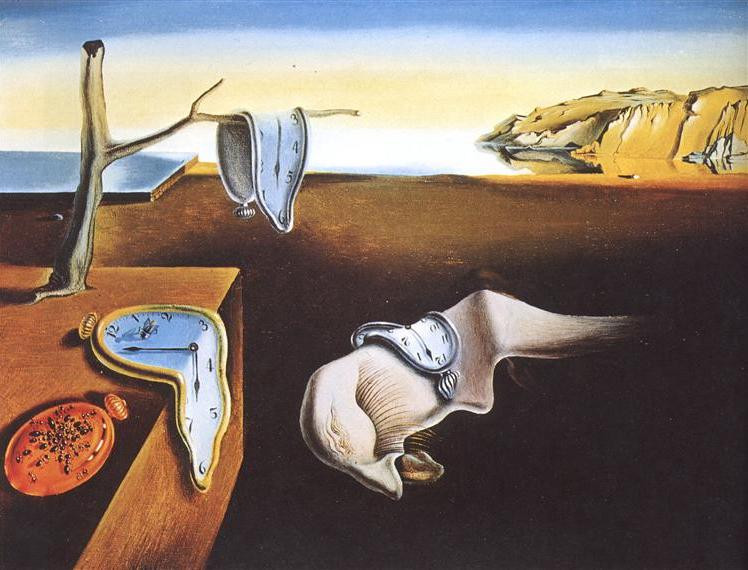
Surrealism offered Dalí a theoretical framework for exploring dreams, the unconscious and free association. He developed a visual language based on perfect illusion, the unexpected transformation of objects and the almost photographic precision of the brushstroke. His paintings feature open Mediterranean landscapes, elongated figures, personal symbols and objects rendered strange by their metamorphosis. The image of soft watch becomes one of the emblematic motifs of his universe.
His work is based on a method he sometimes calls the critical paranoid approach. It consists in multiplying the possible interpretations of forms, superimposing several realities in a single image and creating compositions where the eye oscillates between appearance and suggestion. This approach lends his works an ambiguous dimension, oscillating between technical rigor and unbridled imagination.
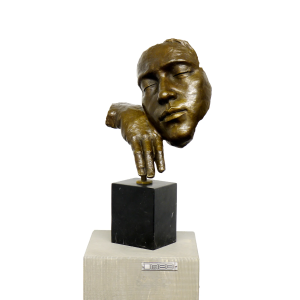
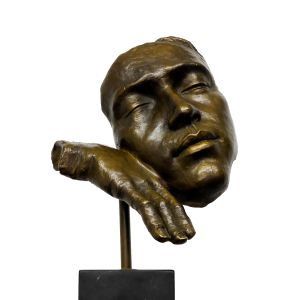
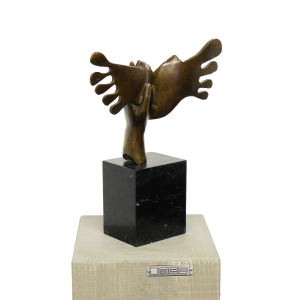
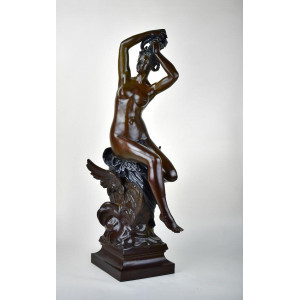
In the 1930s and 1940s, Dalí asserted his artistic identity on the international scene. He also tackled sculpture, the engraving, the jewelry, the decor and three-dimensional objects, seeking to extend his language beyond painting. His relationship with reality, often treated with irony or fascination, materializes in elongated forms, anamorphoses, optical illusions and compositions where objects seem to float in silent settings.
From the 1950s onwards, Dalí turned his attention to science and religion, incorporating issues such as the atom, perspective and the legacy of the Renaissance. He created works that combined meticulous figuration with complex symbolic constructions. Despite this evolution, the presence of the Mediterranean and Catalan light remains a common thread running through his work.
Until his death in 1989, dalí's work is protean, encompassing painting, objects, interior architecture, stage design and writing. His work occupies an important place in the history of twentieth-century art, characterized by the intensity of his imagination, the precision of his gestures and the permanence of an immediately recognizable visual universe.