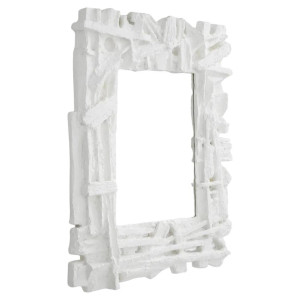
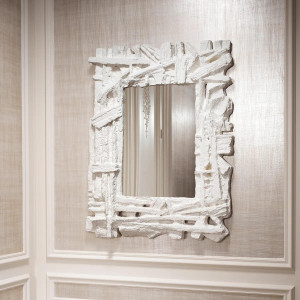
Explore the World of Wall Mirrors through the Ages
Welcome to our exclusive collection of wall mirrors, where every reflection tells a story. Our mirrors, chosen for their beauty and rich history, span eras and styles, offering a fascinating glimpse of decorative art through the centuries.
From the Origins to Antiquity
The history of wall mirrors begins in the ancient civilisations of Egypt and Mesopotamia, where they were mainly used by the elite. Our antique pieces reveal frames richly adorned with precious metals and stones, reflecting the status and wealth of their owners.
The Middle Ages and the Renaissance: Reflections of the Sacred and the Profane
In the Middle Ages, the mirror became a symbol of vanity in Christian art, but also a centrepiece in the homes of the powerful. The Renaissance saw the development of mirror manufacturing techniques in Italy, particularly in Venice. Our mirrors from this period are framed in carved wood or inlaid with marquetry, reflecting the innovation and art of living of the period.
The Baroque and Rococo Period: Reflected Exuberance
The Baroque and Rococo periods brought a new dimension to wall mirrors, with increasingly ornate frames. The mirrors of this period, often of large dimensions, were intended to impress, reflecting the light and magnifying the opulent interiors of European palaces.
Classicism and Modernism: Purity of Line
As we move into the modern era, mirrors become simpler. The classical style favours symmetry and clean lines, while the modernist and contemporary movements exploit geometric shapes and innovative materials such as stainless steel and frosted glass, reflecting current trends in interior design.
The Contemporary Era: Innovation and Customisation
Today, wall mirrors are no longer just functional; they have become decorative elements in their own right. Our contemporary collection includes bold creations by renowned designers as well as custom pieces that can transform any space.
Our Collection
Our website takes you on a journey through time with mirrors that are more than just objects: they are pieces of history, works of art, focal points that captivate the eye and expand spaces. Each mirror is selected for its quality, style and history, with particular attention paid to detail and authenticity.