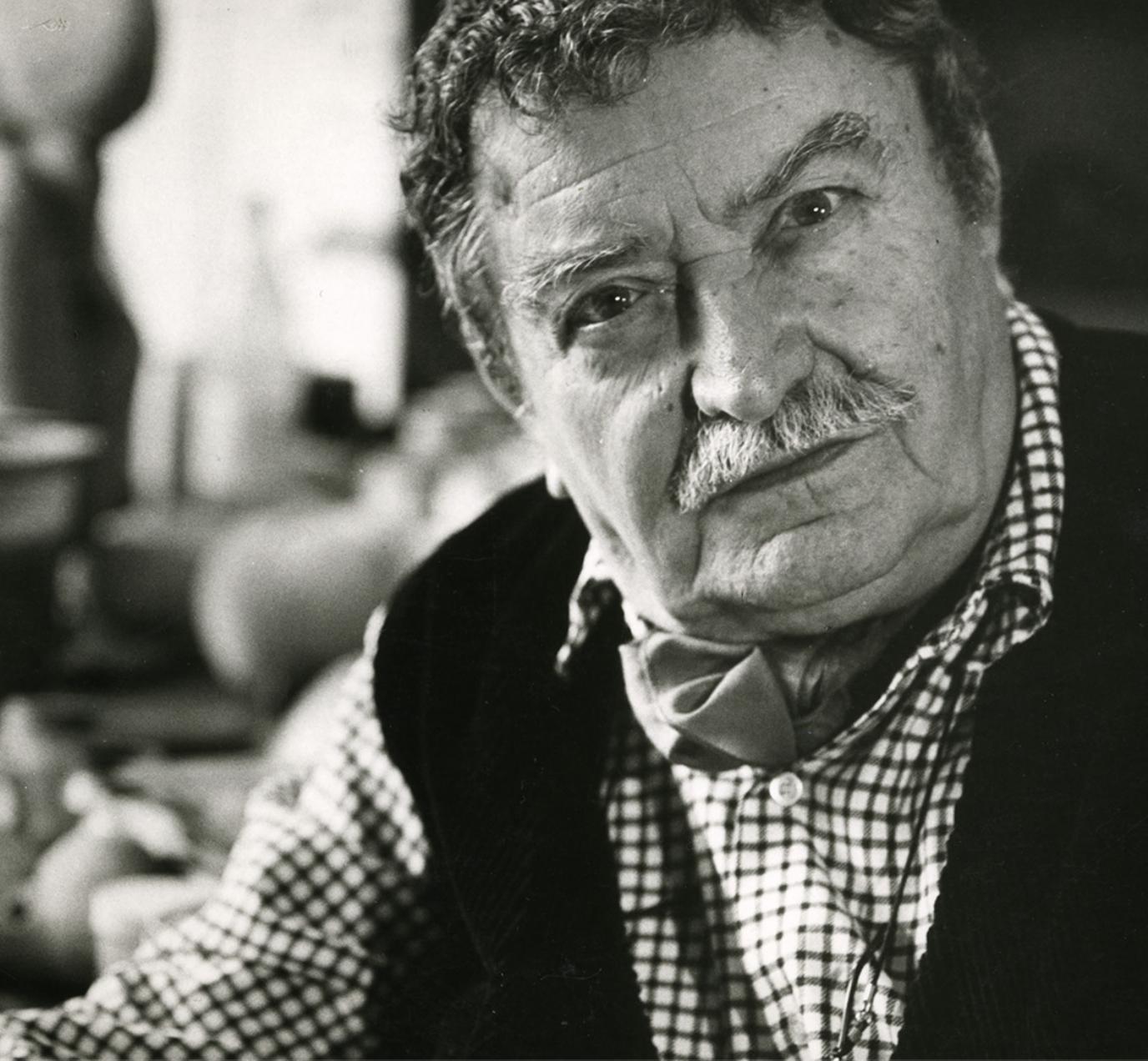
Roger Capron (1922–2006) occupies a unique place in the history of 20th-century French ceramics. An artist, ceramist and designer, he helped to transform the perception of ceramics in France, turning this traditional craft into a true arena for artistic experimentation.

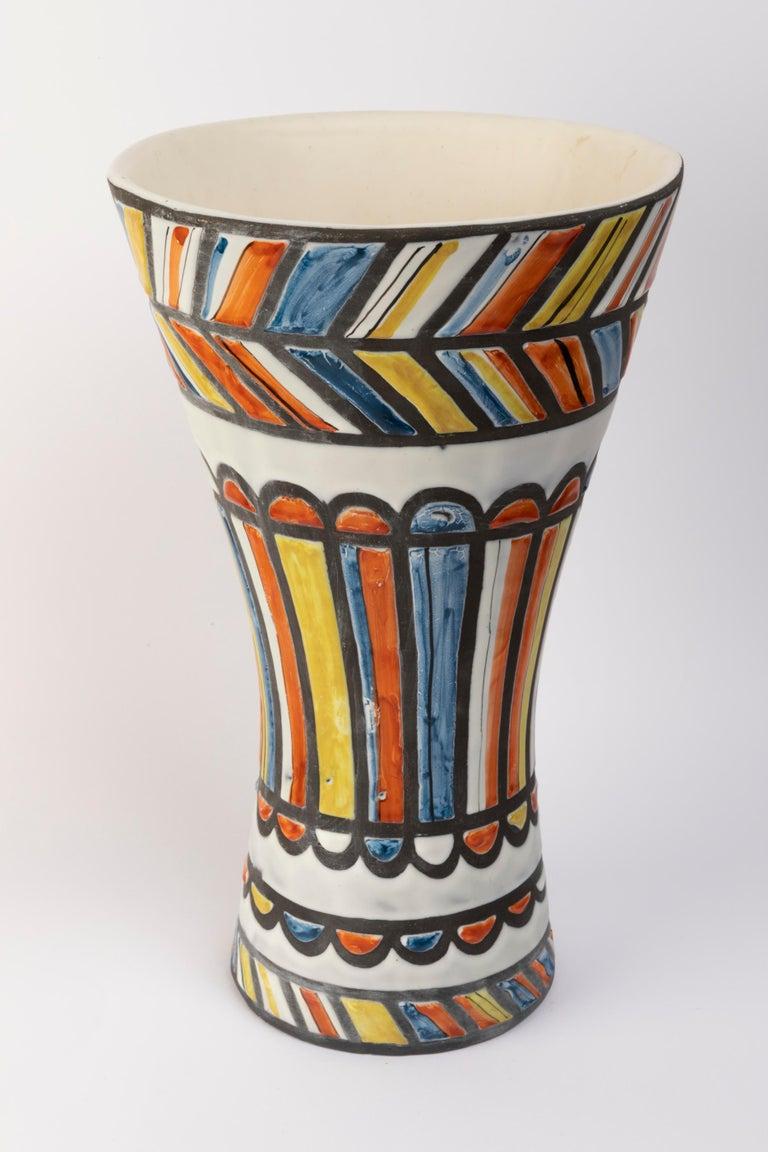
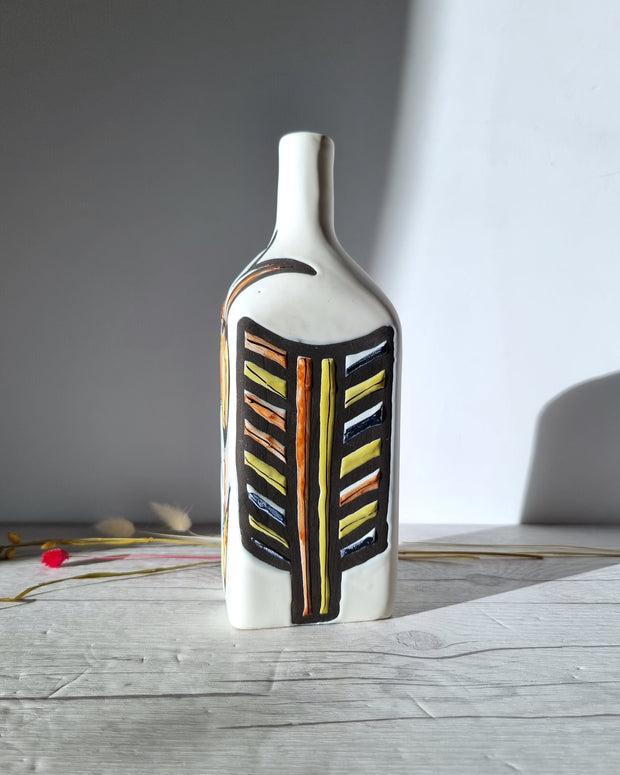
His work combines architectural forms, graphic motifs, Mediterranean colours and artisanal skill. Through his creations, Capron demonstrates that ceramics can be at once functional, decorative and profoundly artistic.

This philosophy fits naturally with the ethos of Galerie Martynoff, where decorative objects are valued as much for their beauty as for their history, craftsmanship and ability to stand the test of time.

A new generation of French ceramicists

Roger Capron, born in Vincennes in 1922, studied at the École des Arts Appliqués à l’Industrie in Paris. After the Second World War, he developed a particular interest in ceramics, which was then experiencing a genuine revival in France.

In 1952, he moved to Vallauris, a small town on the Côte d’Azur that had become one of Europe’s major centres for artistic ceramics.

There he joined Pablo Picasso, Jean Cocteau, Suzanne Ramié and other artists drawn to the possibilities offered by clay and fire.

Vallauris thus became a veritable artistic laboratory where the tradition of pottery met the explorations of modern art.

Ceramics as a modern art form

At a time when industrial design is gradually gaining ground, Roger Capron advocates a different approach.

For him, ceramics should not be reduced to mere utilitarian objects. They can become a medium for expression, a canvas for colour, design and material.

His creations explore, in particular:

    • geometric shapes;

    • botanical motifs;

    • stylised figures;

    • abstract compositions;

    • reliefs and textures;

    • contrasts between clay and glaze.

This approach gives his works an instantly recognisable identity.

The role of Vallauris

Vallauris plays a key role in Capron’s artistic development.

The town has a long tradition of producing utilitarian pottery. Capron helped transform this heritage into a thriving contemporary creative industry.

Together with Jean-Paul Bonnet and Robert Picault, he founded the Callis workshop in 1946, before setting up Capron Pottery in 1952, which produced pieces aimed at a wider audience.

This desire to make artistic ceramics accessible is one of the defining features of his career.

From tiles to decorative panels

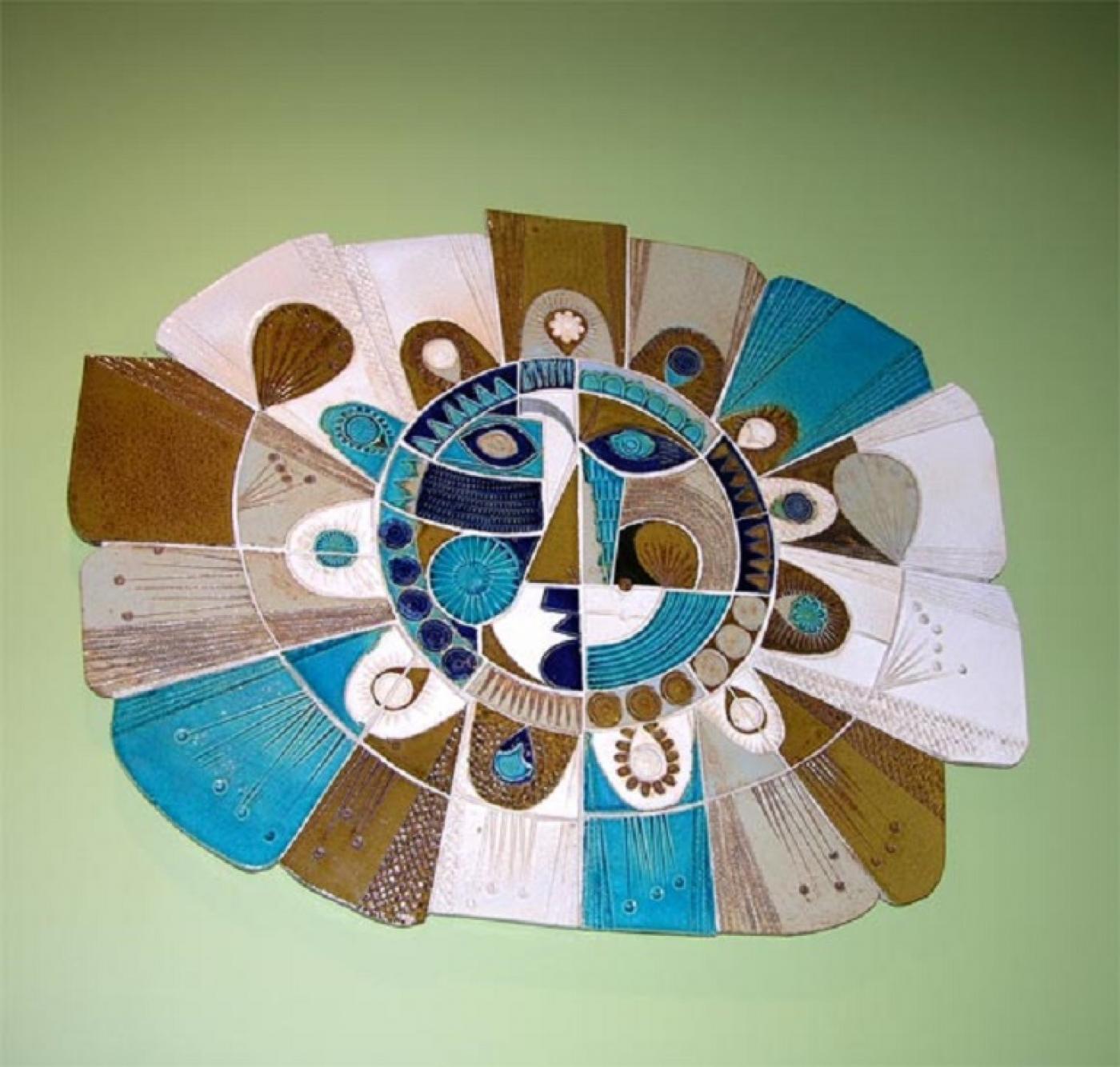
Roger Capron also explores spectacular uses for ceramic tiles.

He creates monumental wall compositions in which each tile becomes part of a larger image. His panels can depict landscapes, figures, Mediterranean scenes or abstract compositions.

This approach brings ceramics closer to architecture.

The wall is no longer simply a functional surface: it becomes a work of art.

A Mediterranean aesthetic

The light and landscapes of the south of France have a profound influence on Capron’s work.

Earthy tones, blues, ochres, greens and warm colours directly evoke the Mediterranean.

However, his work is never confined to a folkloric representation of the South. The forms are simplified, the compositions take on a graphic quality and the motifs acquire an almost universal dimension.

This blend of Mediterranean tradition and modernity goes a long way towards explaining the enduring appeal of his style.

Material at the heart of creation

At Roger Capron, the material is just as important as the design.

The irregularities of the clay, the variations in the glaze and the marks left by the firing all contribute to the identity of each piece.

This artisanal dimension is essential: two pieces based on the same design may exhibit slight differences, revealing the human touch of their creation.

It is precisely this interplay between technical mastery and spontaneity that makes her creations particularly prized by collectors.

From mass production to one-off pieces

Over the course of his career, Capron gradually moved towards a more personal style.

After working for several decades within a production-oriented framework, he returned to a more experimental approach and began creating more one-off pieces.

His later works demonstrate a greater sense of freedom: more abstract compositions, richer surfaces and a constant exploration of materials.

This evolution shows that he never ceased to question his own artistic language.

From mass production to one-off pieces

Over the course of his career, Capron gradually moved towards a more personal style.

After working for several decades within a production-oriented framework, he returned to a more experimental approach and began creating more one-off pieces.

His later works demonstrate a greater sense of freedom: more abstract compositions, richer surfaces and a constant exploration of materials.

This evolution shows that he never ceased to question his own artistic language.

Conclusion: Earth transformed into poetry

Roger Capron has helped usher French ceramics into a new era.

By combining traditional craftsmanship, modern design and artistic expression, he demonstrated that clay could become much more than just a functional material.

His creations tell a story of colour, texture and creative freedom, whilst maintaining a deep connection to French artisanal traditions.

Roger Capron ’s work finds its natural place within the world of Galerie Martynoff: it serves as a reminder that a true work of art is one that successfully brings together the craftsman’s skill, the artist’s imagination and the collector’s eye.

Product added to wishlist