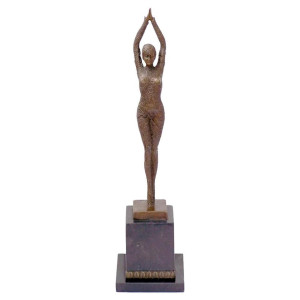
D. H. Chiparus sculptural elegance and Art Deco glamour
Born in Romania in 1886, Demetre Haralamb Chiparus continued his artistic training in Paris, where he settled at the beginning of the 20th century. At the time, Paris was the world capital of the decorative arts, fertile ground for a young sculptor who quickly developed a personal, sophisticated and instantly recognizable style. Chiparus became one of the great figures of Art Deco sculpture, a movement characterized by geometry, movement, dynamism and stylized elegance.
Chryselephantine, an emblematic technique
Chiparus excels in the so-called chryselephantine technique, which combines patinated bronze and carved ivory to create works of extraordinary realism. This combination of materials, very popular in the 1920s and 1930s, gives finesse, warmth and life to the faces, hands and details of the sculptures, while retaining the power of bronze for the poses and drapery.
Thanks to this technique, his dancers seem to vibrate with movement and grace.
Dancers: a symbol of modernity
Chiparus is best known for his Art Deco dancers, inspired by several major sources:
visit Ballets Russes by Diaghilev,
visit parisian cabarets,
visit international magazines,
l'Ancient Egypt, which became fashionable after the discovery of Tutankhamen's tomb in 1922.
His figures are characterized by their dynamic poses, richly detailed costumes, theatrical attitudes and lanky elegance. They embody the modern, liberated and flamboyant woman of the Roaring Twenties.
A refined, decorative and sophisticated style
The works of Chiparus seduce with their precision. The drapery, textures, stylized embroidery, geometric ornamentation and costume details testify to exceptional meticulousness. The sculptor creates pieces that combine plastic beauty, a sense of decoration and a desire to capture the perfect gesture.
His style is characterized by :
flowing, elongated lines,
theatrical and choreographic poses,
luxurious, intricately patterned costumes,
a constant search for harmony and symmetry.
International renown in the 1920s and 1930s
As early as the 1920s, Chiparus became one of the most prominent sculptors in specialized Art Deco galleries. His works, published by the major Parisian foundries, found their way into the elegant interiors of the day, from bourgeois salons to the lobbies of prestigious hotels. He perfectly embodied the taste of his time, with its mix of exoticism, modernity and sophistication.
An artist rediscovered and celebrated
After the Second World War, Art Deco went through a period of oblivion before coming back with a vengeance in the 1970s. This revival of interest in design and decorative art reveals the major importance of D. H. Chiparus in the history of sculpture. Today, his works are among the most sought-after on the Art Deco market, as much for their aesthetic quality as for their rarity.
Owning a sculpture of Chiparus, the Art Deco collection is emblematic of the glamour, modernity and creativity of the Roaring Twenties. His dancers, sculpted icons of Art Deco, represent the apogee of a style that continues to fascinate collectors.