- News
- 7 likes
- 35848 views
- 0 comments
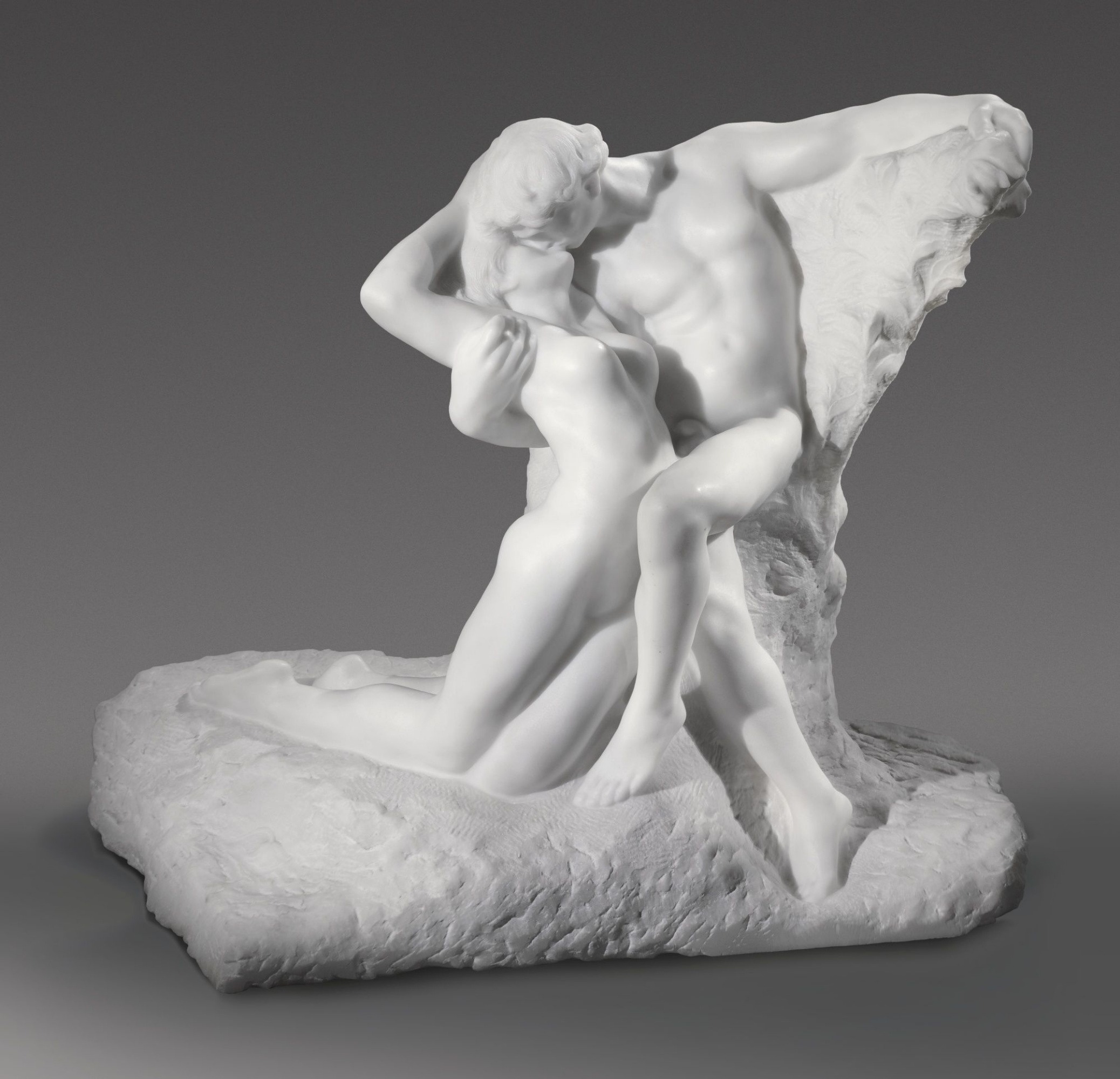
The Eternal Spring by Auguste Rodin
The Eternal Spring, also known as Zephyr and Earth or Love and Psyche, is probably one of the most emblematic representations of passionate love. This bronze, derived from the Torso of Adele, with a dark brown and green patina, was originally intended as a group for the Porte de l'Enfer, but it was never included, like The Kiss. The work was, however, exhibited at the 1898 Salon.
This sculpture of a passionate embrace of a naked couple has a powerful emotional and possibly autobiographical dimension. Although married to Rose Beuret Mignon, Rodin met Camille Claudel in 1882 when Alfred Boucher, her sculpture teacher, entrusted him with her pupils. He quickly fell in love with the young woman. This work therefore echoes the feelings of the most remarkable sculptor of the late 19th century.
Rodin's graceful movement is reminiscent of eighteenth-century sculpture, but the eroticism of his composition sets him apart from his predecessors. Whereas Canova preferred to represent his figures somewhat distantly, Rodin intertwined them.
The sculpture depicts an erotic love which is increased tenfold by the sensuality of the curved body, stretched towards the lips of the male figure. The man, with his rising curve, dominates the composition just like the female figure. The two lovers hold each other passionately.
L'Eternel Printemps was a great success and has been translated several times into bronze and marble. Rodin also made a few variations over the years. This version is the most common model and is used by the Barbedienne foundry, which acquired the publishing rights to the bronze version in 1898. This model was produced in four sizes for over twenty years between 1898 and 1918.
Comments (0)