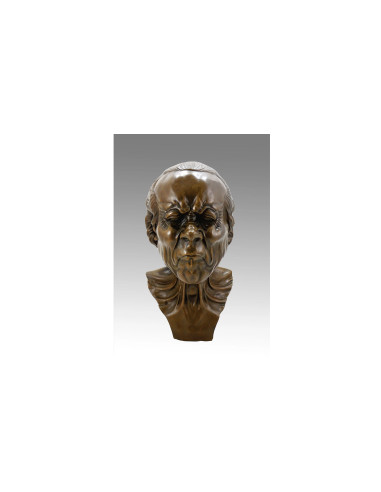
Bust of a character in patinated bronze, Neoclassical style
Bust of a character in patinated bronze, neoclassical style
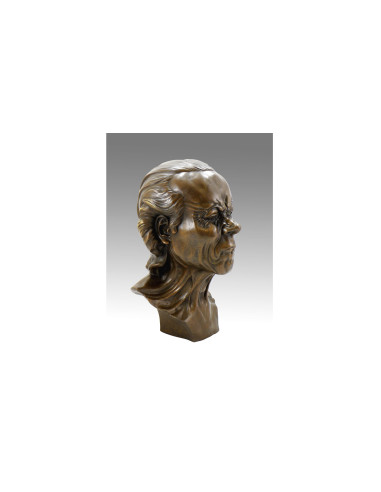
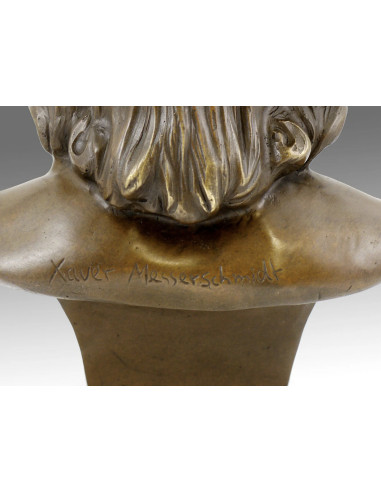
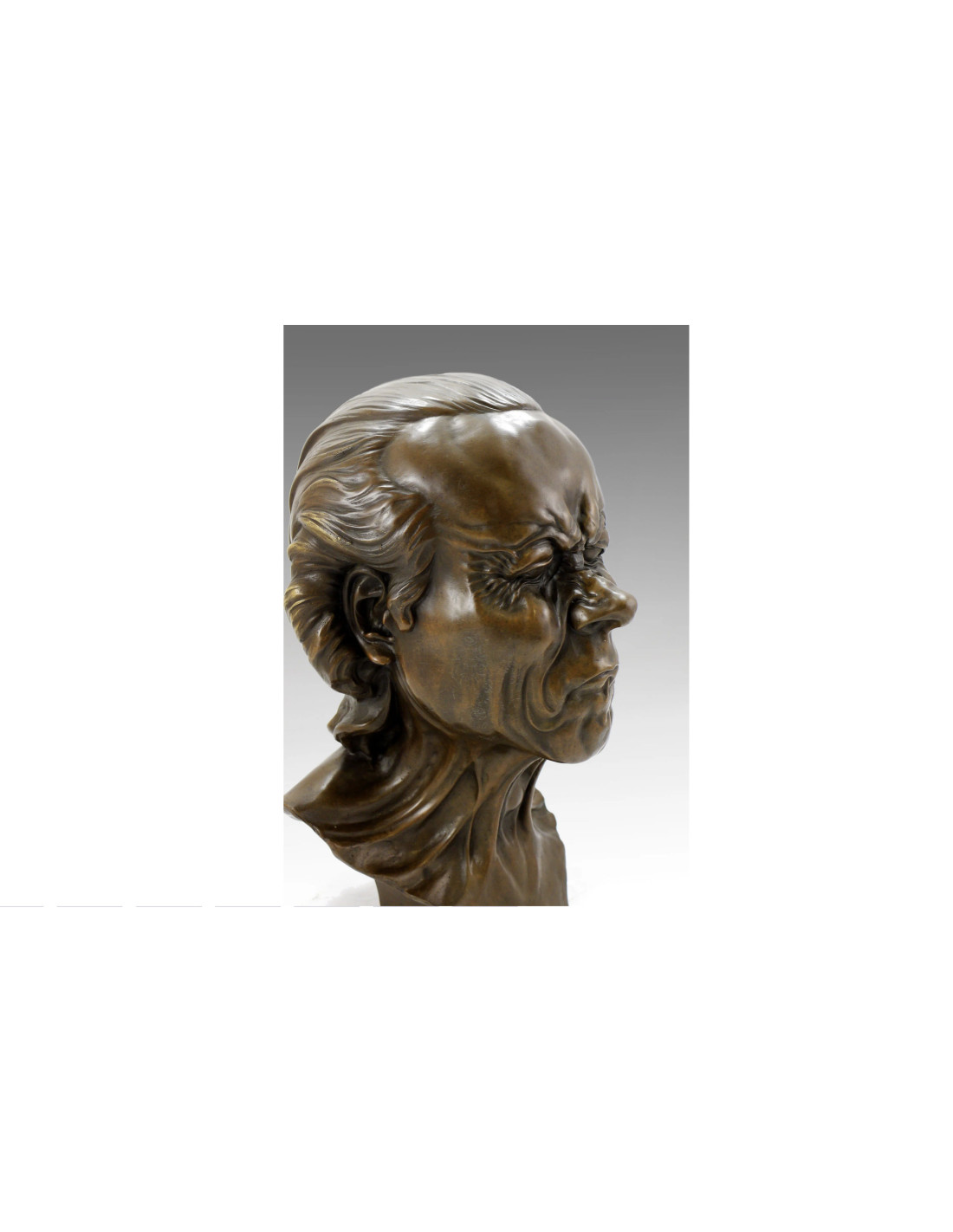
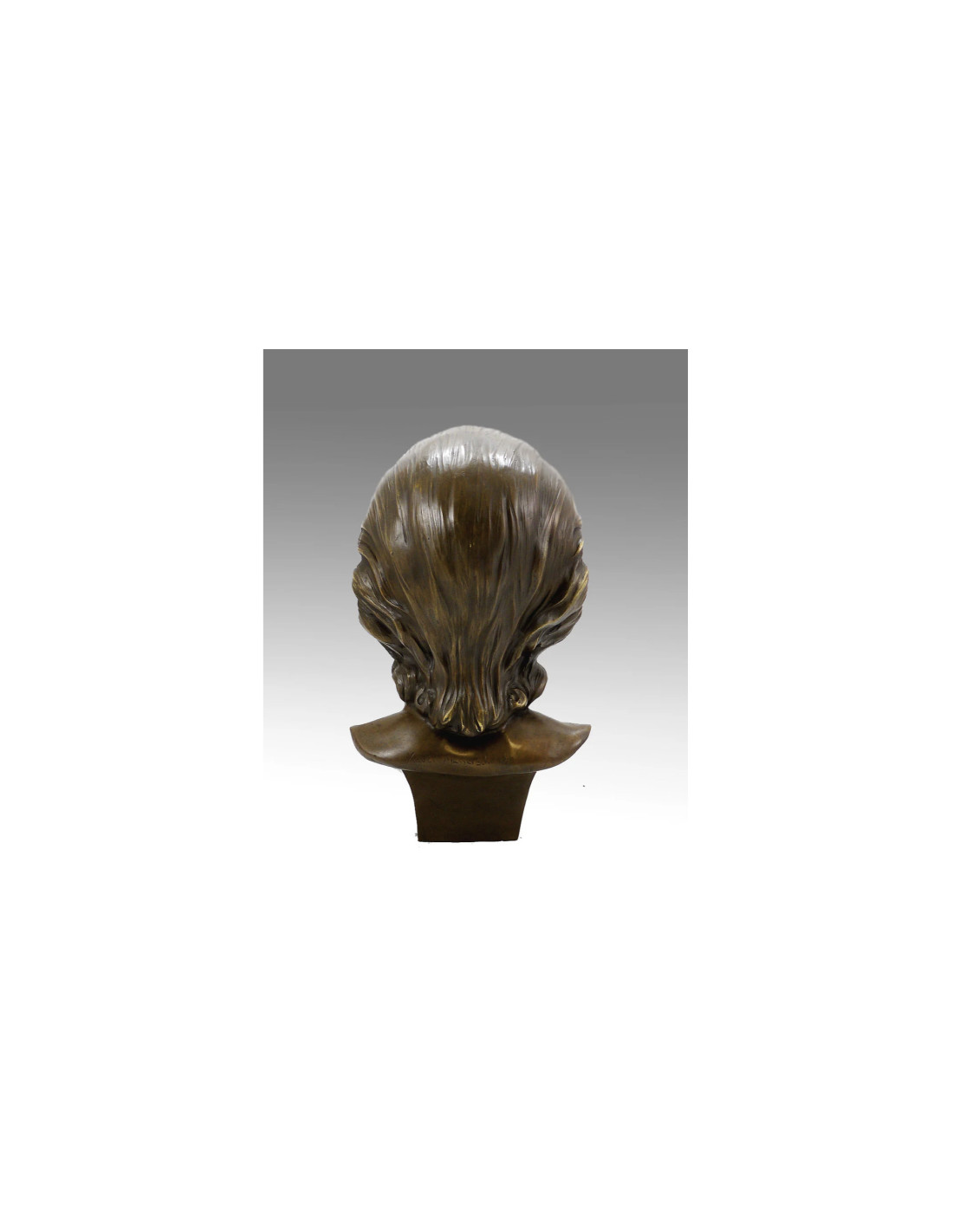
Bust Head of character in patinated bronze in the neoclassical style, inspired by the famous series created by Franz Xaver Messerschmidt at the end of the 18th century. This bronze bust depicts a male head with contracted features, squinted or closed eyes and a taut mouth, reflecting strong muscular tension. The dark patina highlights the relief, deep wrinkles and anatomical structure of the face.
Dimensions: H 35 × W 22 × D 23 cm
Please contact us before ordering to confirm availability.
Bust of a character in patinated bronze, neoclassical style
Bust Head of character in patinated bronze in the neoclassical style, inspired by the famous series created by Franz Xaver Messerschmidt at the end of the 18th century. This bronze bust depicts a male head with contracted features, squinted or closed eyes and a taut mouth, reflecting strong muscular tension. The dark patina highlights the relief, deep wrinkles and anatomical structure of the face.
Dimensions: H 35 × W 22 × D 23 cm
Please contact us before ordering to confirm availability.
Franz Xaver Messerschmidt was born in 1736 in the German-speaking area of Central Europe. He received a solid academic training, first in Munich and then in Vienna, where he established himself as a sculptor who mastered the codes of the late baroque and incipient neoclassicism. His early works show great technical rigour and an in-depth knowledge of anatomy and modelling.
Over the course of his career, Messerschmidt creates portraits, official busts and works for institutional commissions. These works were part of an academic tradition in which resemblance, the dignity of the subject and formal clarity were essential criteria. However, from the 1770s onwards, his work took a singular direction.
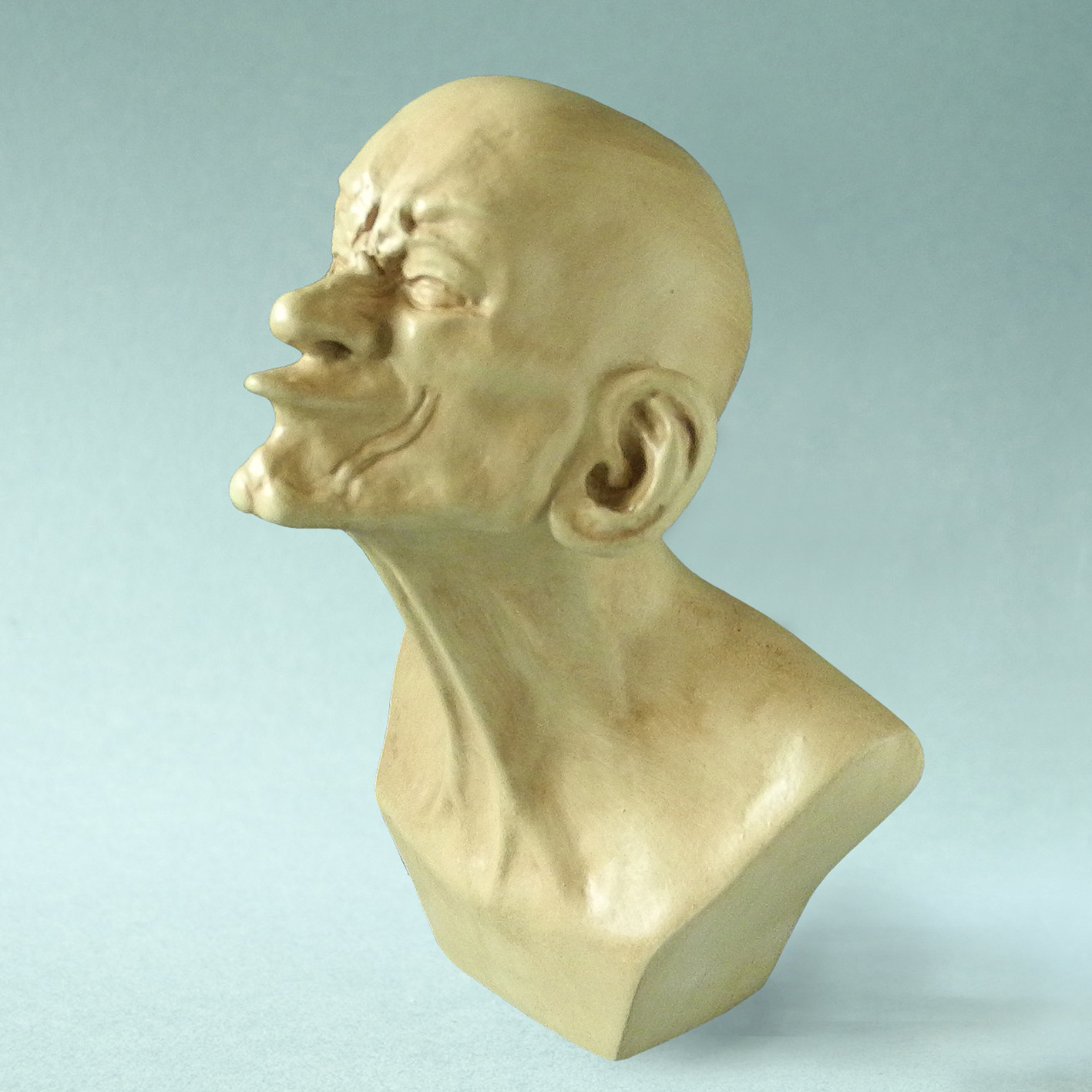
It was during this period that he designed the famous character heads, the work is a series of busts depicting intense and sometimes extreme facial expressions. These sculptures are characterised by a systematic exploration of facial muscular tension, grimaces, contractions and mental attitudes. The features are exaggerated but precisely observed, revealing an in-depth study of human physiology.
The heads of Messerschmidt are mainly made in metal alloy or in alabaster, these are materials that enable a fine rendering of surfaces and volumes. The expressions, often frozen in a moment of concentration or tension, give these works an unsettling presence. They move radically away from classical idealisation towards introspective, analytical research.
The series as a whole occupies a special place in the history of sculpture. It anticipates modern questions about psychology, identity and the representation of the inner state. It is not part of any particular movement, Messerschmidt developed an isolated approach, marked by an almost scientific rigour and an expressive intensity that was rare for its time.
Franz Xaver Messerschmidt dies in 1783. His work, long marginalised, is now recognised as one of the most singular of the eighteenth century. The Heads of Character constitute a unique body of work, at the crossroads of academic tradition and early modernity, making the artist one of the world's greatest painters Messerschmidt an essential figure in European sculpture.
You might also like