Auguste Rodin: the birth of modern sculpture
Born in Paris in 1840, Auguste Rodin has established himself as a major figure in Western art. From an early age, he revealed a deep sensitivity to form and an instinctive sense of modelling. After several rejections at Fine Arts, as a demanding self-taught artist, he forged his own solid technique and unique artistic language. This independence was the foundation of the identity of the man who was to become one of the most influential sculptors of all time.
The foundations of a new style
Rodin renewed sculpture by moving away from academicism. He favoured observation of reality, freedom of gesture, working in fragments, expressive modelling and sincerity of form. His works do not seek smooth perfection, but vibration, tension and inner life. The body becomes a territory of emotion, traversed by light and matter.
The Gates of Hell and the great mythical figures
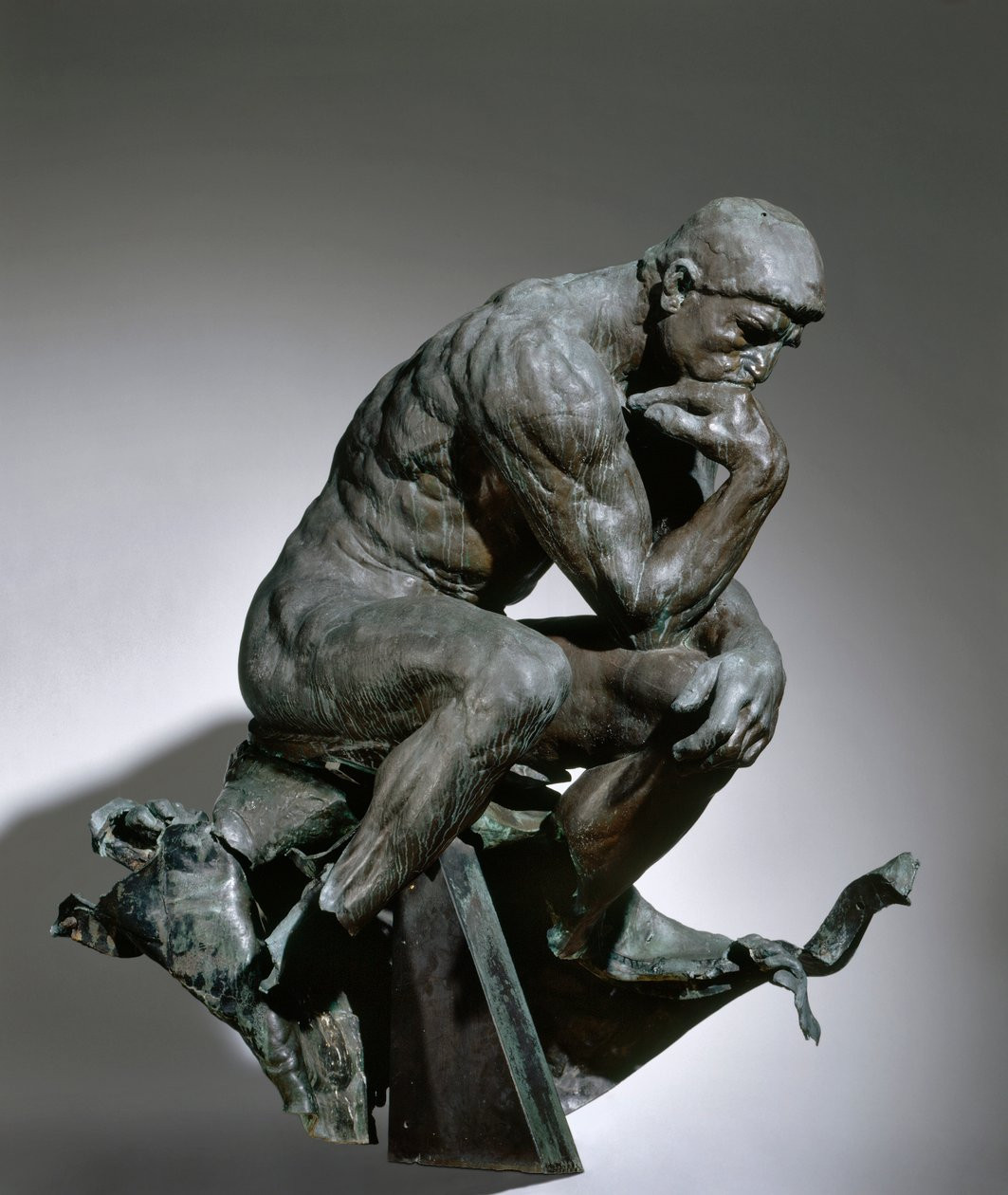
In 1880, Rodin was commissioned to create The Gates of Hell, a monumental work inspired by Dante. He worked on it for almost thirty years. It was from this work that several of his most famous sculptures emerged.
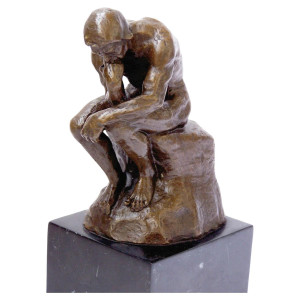
The Thinker.
The Kiss.
The Shadows.
Ugolino and his sons.
They embody the expressive power of the sculptor and his ability to translate the complexity of the human soul through matter.
A sculptor of movement and light
Rodin gave his works an unprecedented dynamism. The irregular, vibrant modelling captures the light in an expressive way. The lively surfaces, tense poses and asymmetries create a psychological realism for which he is renowned. He sculpted not only the form, but also the space around it, playing on the contrasts between full and empty.
A modern approach to the fragment and the unfinished
One of Rodin's major innovations lay in his interest in the fragment. A hand, a torso, a partial gesture can become a work in its own right. The unfinished is not an imperfection, but a means of expressing the essential. This break with academic codes had a lasting influence on twentieth-century sculpture.
Portraits of rare intensity
Rodin also excelled in portraiture, revealing the personality of his models through expressive work on features, flesh and posture. His busts of illustrious literary and political figures bear witness to a profound eye and an exceptional ability to capture the inner being.
A prolific workshop and an immense legacy
From 1900, Rodin became an international reference. His studio, located in Meudon and Paris, became a bubbling creative place where assistants, practitioners and students all participated in the creation of his works. The richness of his output, the influence of his technical innovations and the strength of his universe earned him worldwide recognition.
The legacy of the Master of Meudon
Auguste Rodin left an immense body of work, spread across the greatest institutions. His approach to materials, light, movement and the body marked a decisive turning point in the history of sculpture. He inspired all modern sculpture, from Maillol to Brancusi, and remains a key figure for collectors.
To own a work inspired by Rodin is to embrace the legacy of the sculptor who redefined beauty, emotion and freedom in sculpture.