A Meissen porcelain sculpture of a...

A Meissen porcelain sculpture of a group of children, 18th century.

A Meissen porcelain sculpture of a group of children, 18th century.

A Meissen porcelain sculpture of a group of children in the countryside, 18th century, circa 1760.
H: 22cm, D: 16cm
Please contact us before ordering to confirm availability.
€3,300.00

Transport Gratuit pour la France et pour le Monde contactez-nous


A Meissen porcelain sculpture of a group of children, 18th century.

A Meissen porcelain sculpture of a group of children in the countryside, 18th century, circa 1760.
H: 22cm, D: 16cm
Please contact us before ordering to confirm availability.
Style
20.Louis XV, Transition
Type
Antiques
Period
10.18th century
Material
Porcelain

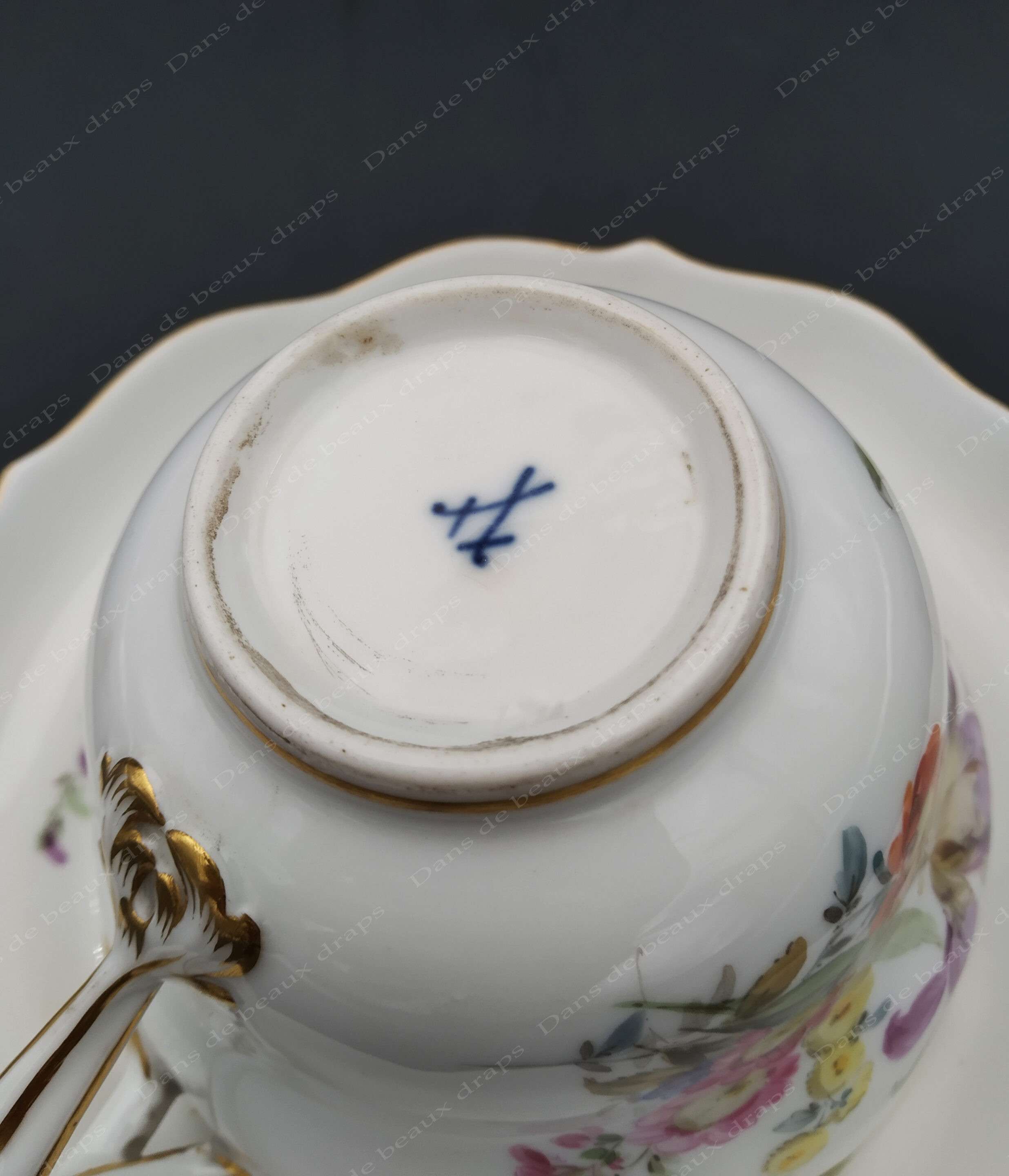
Meissen porcelain was born in 1710 in the electorate of Saxony, at the castle ofAlbrechtsburg, the first workshops were set up in Meissen. This date marked a major breakthrough in the European arts of fire, as Meissen became the first factory to master the hard porcelain using a process previously known only in China and Japan. The improvement in the paste, its whiteness and its resistance immediately set the Manufacture as a benchmark. 

The first creations are part of a register baroque, then rococo, these were characterised by dynamic shapes, delicate reliefs and floral decorations. The workshops developed a wide variety of tableware, vases, bowls, teapots and sculpted pieces, in which painting played a central role. Motifs such as european flowers, the birds, the oriental decor or landscapes became emblematic of Meissen in the 18th century. 

One of the most famous signatures of the manufacture is the production of porcelain figurines, they are often inspired by gallant scenes, characters from the commedia dell'arte, animals or social types. These works, modelled with great precision, reveal a sculptural expertise that sets Meissen apart from other factories. 

In the 19th century, the company adapted its repertoire to new trends, incorporating neoclassical, historicist and naturalistic elements. While renewing certain forms, it retained its historic models, which remained a constant success. Meissen porcelain also maintained a high standard of decorative painting, carried out by specialist artists in its in-house workshops. 

In the contemporary period, Meissen has continued to produce porcelain, combining its traditional designs with more modern creations, while retaining the quality of its paste and mastery of firing that have made it famous. It remains one of the great names in European porcelain, and an essential witness to the history of taste since the 18th century. 

You might also like

You May Also Like

Product added to wishlist